Two Can Keep A Secret – Book Review

40099425
Image copyright: https://www.goodreads.com/book/show/40099425-two-can-keep-a-secret

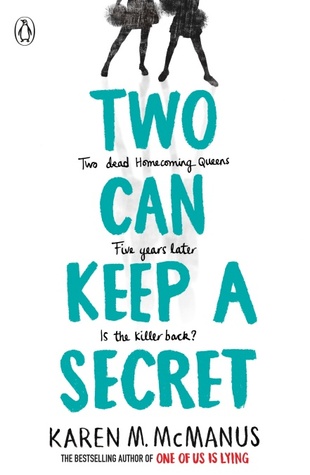
Two Can Keep A Secret is just as brilliant and terrifying as McManus’s previous novel, One of Us Is Lying.

The plot centres on twins Ellery and Ezra, who move to the sleepy town of Echo Ridge. Ellery and Ezra’s maternal aunt was murdered in Echo Ridge in 1995. Five years ago, the town’s homecoming queen was also murdered. Now the killer claims to be back.

I’d loved One of Us is Lying when I read it in 2017, so naturally I was both excited and a little apprehensive when I heard that a new book was coming out from McManus. I was concerned that the two books may be too similar to one another, however they actually have little in common outside of being murder mysteries.

In any mystery story, I’m usually obsessed with the build-up. I love the secrecy and the flakiness of the characters and the constant tension permeating the plot. Yet being enamoured with build-up can also mean that I’m inevitably disappointed with the eventual pay-off. However (without wanting to spoil anything), I actually liked the pay-off in Two Can Keep A Secret. What’s more, I thought the very last line of the book was so chilling that I had to sleep with the lights on that evening…like a big, wussy baby!

I really liked the characters of Ellery, Ezra, Mia and Malcolm; their little friendship group was believable and Ellery and Malcom’s blossoming romance was downright adorable.

The ‘small, provincial town’ of Echo Ridge was delightfully creepy, made even more so by the Fright Farm Halloween Park (formerly ‘Murderland’).

As with any good mystery, many of the characters were suspicious and unreliable, so there were ample opportunities for McManus to throw in some red herrings.

I’ll hold my hands up and be the first to admit that I don’t read a lot of murder mysteries; as such, I’m not sure how Two Can Keep A Secret holds up alongside other examples of the genre, but I loved it all the same.

How to Stop Time – Book Review

*SPOILER WARNING*

This story centres around Tom Hazard. He may look like a forty-something history teacher, but he’s actually hundreds of years old. As Tom moves from place-to-place and century-to-century, he must grapple with loss, loneliness and despair. All the while, he’s trying to find renewed meaning in a life which never seems to end.

I read Haig’s Reasons to Stay Alive a few years ago and I thought it was a moving reflection on the human experience. Naturally, I wanted to read more of his work and when I heard about the concept for How to Stop Time, I thought it sounded intriguing.

Sad to say, I was disappointed. Like, really disappointed.

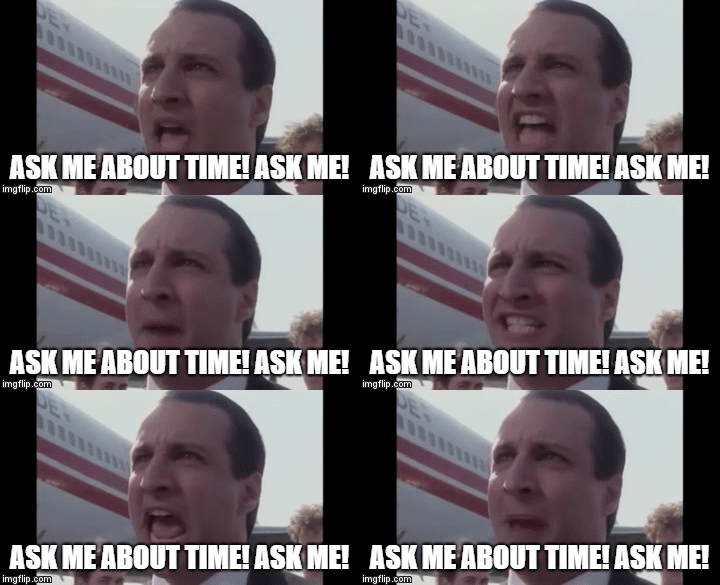
The book’s biggest issue, for me, came in the form of our protagonist, Tom Hazard; a character so relentlessly miserable that it becomes difficult to relate to him. Yes, I know what Haig was going for: Tom is the tortured loner who is doomed to live his life alone. However Tom lacked the emotional nuance or depth which would have made his plight more compelling. His incessant ‘deep’ musings on the nature of time just reminded me of Mr Toomy’s breakdown from 1995’s The Langoliers.
2v75jk

As one would expect from a story of this kind, Tom has several meaningful encounters with notable historical figures such as Shakespeare and F. Scott Fitzgerald (Tom was one of the first people to confirm that The Great Gatsby is, in fact, great). These encounters have more than a whiff of self-insert fanfiction about them. Thankfully, other celebrities such as Charlie Chaplin, Lillian Gish and Pyotr Ilyich Tchaikovsky only have fleeting cameos, thus rendering their presence less frustrating.

The Shakespeare scenes were particularly difficult to suffer through (although they improved immeasurably when I started imagining the character with David Mitchell’s voice).
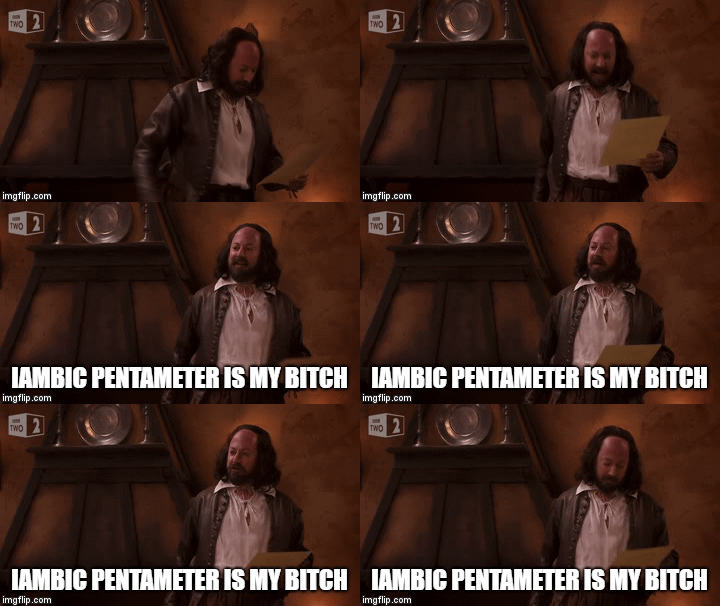
2v712p

Speaking of Shakespeare, there was one passage in the book which I found especially baffling. For context, the year is 1599 and Tom is teaching his sweetheart, Rose, to play the lute. The passage reads as follows:

‘Music is about time,’ I told her. ‘It is about controlling time.’

When she stopped playing, she looked thoughtful for a moment and said something like, ‘I sometimes want to stop time. I sometimes want, in a happy moment, for a church bell never to ring again. I want not to ever have to go to the market again. I want for the starlings to stop flying in the sky…But we are all at the mercy of time. We are all the strings, aren’t we?’

She definitely said that last bit: We are all the strings.

Rose was too good for picking fruit. Rose was a philosopher, really. She was the wisest person I ever knew. (And I would soon know Shakespeare, so that’s saying a lot.)

Rose is not an historical figure. She is a figment of Matt Haig’s imagination. Therefore, by praising her unworldly wisdom and placing her on the level of Shakespeare, it feels quite self-aggrandising on Haig’s part. I get the impression that Haig wanted certain quotes such as we are all the strings to become the stuff of twee Pinterest posts or contenders on Buzzfeed lists of ‘most inspiring book quotes from 2017.’ It’s all a bit too try-hard for me. Whilst reading it, I could practically hear Gravity Falls’s Grunkle Stan in my head saying:
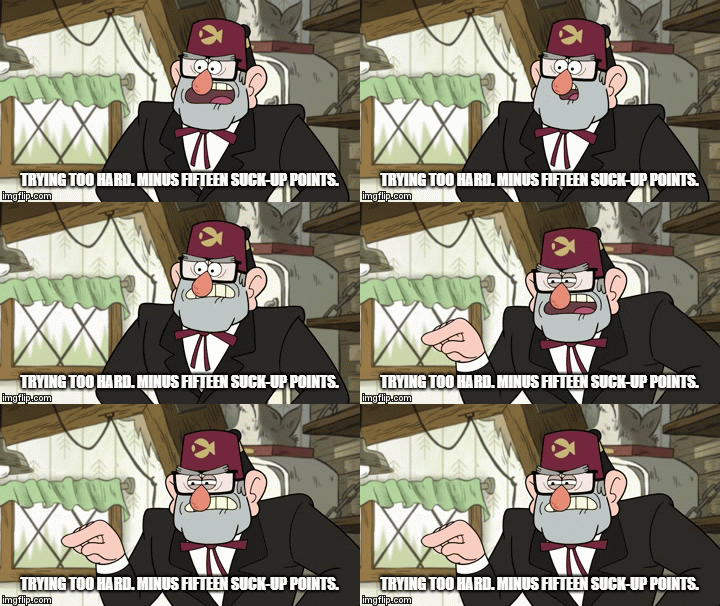
2v72p4

Haig’s depiction of his female characters was occasionally sloppy. It wasn’t the worst representation by any means, but it was far from good. Every prominent female character needed saving either physically or emotionally by our ‘Gary Stu’ hero. On top of this, several passages made me feel a tad uncomfortable. For example, in 1623 Tom discovers that Rose is sick with plague and he goes to visit her whilst he still can. Upon seeing her, Tom recalls bygone times when her body ‘had writhed with pleasure not pain.’ It’s framed as a sweet moment, but all I could think was: ‘Dude, she’s literally dying right before your eyes. Not. The. Time.’

In addition, there’s a scene in Tom’s boyhood days whereby his mother is accused of being a witch. A witch-hunter named William Manning visits their house and forces Tom’s mother to strip naked so that he can look for Devil’s marks on her body. Seeing as the mother’s later killed anyway, the nudity scene came across as gratuitous and unnecessary. Would the mother’s death not have been sufficiently tragic without the inclusion of a prior scene in which she’s sexually humiliated? Is that how storytelling works? If so, Bambi would have been a very different film.

To make matters worse, at no point in the narrative does Tom think to say: ‘Wow Mum, that was quite an ordeal. How are you feeling?’ It made me think of an excellent Guardian article by Elena Lazic about cinematic depictions of sexual violence (link here). In this article, Lazic writes:

The fact that so few of these films explore the impact and trauma, specifically the psychological consequences of such violations seems testament to a lack of engagement beyond shock value.

Lazic goes on to observe that these stories typically focus on:

[…] The experiences of men close to and around the female victims, turning stories of female physical violation into narratives of hurt male pride […].

This is a pretty accurate synopsis of the mother subplot in How to Stop Time.

I was getting really frustrated with the book at this point, but then I stopped myself and thought: ‘Be fair now. Maybe William Manning was a real witch-hunter in ye olde England and maybe he was infamous for making his victims strip before he killed them.’ I did some research, but I couldn’t find an Elizabethan witch-hunter by that name. All I could find was a churchwarden from the 1640s and whilst he was a key witness in the trial of ‘witch’ Elizabeth Hobert, I can’t find any indication that he hunted her down himself.

However, I did come across a witch-finder called Matthew Hopkins (who spent part of his life in Manningtree. Coincidence…?). Whilst Hopkins was indeed known to cut and maim ‘witches’ to prove their guilt, it seems that his preferred methods of torture were either sleep deprivation or ‘swimming tests’ (in which the victim’s limbs were bound before being lowered into a pond). Therefore, the humiliation scene involving Tom’s mother just wasn’t needed. At all.

The whole plot of How to Stop Time appeared to have been cobbled together from separate manuscripts. It felt so fragmented. On top of the Elizabethan segments, we also cut to modern-day London where Tom’s teaching history classes to troubled youths (including smart and sensitive/petty criminal, Anton. He just wants to learn, gosh darnit!). Tom also decides to get a dog; a decision which prompts no real change in Tom’s character or outlook on life.

Additionally, there’s a New York subplot which I believe was an attempt on Haig’s part to pander to a potential American readership.

There was only one section of the book which I unambiguously liked and it was pretty much right at the beginning:

Every few years, Tom goes to see a fellow ‘immortal’ called Hendrich. Hendrich helps Tom to establish a new life and new identity so that nobody gets suspicious of him. Whilst they’re talking by Hendrich’s pool, Tom sees a mouse fall into the water. Tom immediately scoops the creature out of the water and sets it free.

The reason I liked this moment so much is because it reminded me of the book Death by philosopher Todd May (shout-out to fellow fans of The Good Place!). In this book, May references the short story The Immortal by Jorge Luis Borges, wherein an injured man called Cartaphilus drinks from a river which ‘cleanses men of death.’ Cartaphilus is too weak to move from the water and he is soon surrounded by beings called troglodytes (wizened, stooped men). The immortal troglodytes see that Cartaphilus is suffering, but they do not help him. As May observes:

If one is going to live forever, there is, in the literal sense, time for everything.

In this manner, I liked Tom Hazard’s sense of immediacy in rescuing the mouse from the pool. Even though he is hundreds of years old, he is still capable of acting ‘in the moment.’ If we were granted immortality, it would be easy to become cruel or complacent over the suffering of others, so I liked that Tom kept his sense of moral duty. It’s only a small moment, but I thought it had so much more dramatic and emotional weight than Tom’s subsequent monologues.

This wasn’t a great read for me, but it’s nowhere near the worst thing I’ve ever read. I just found it quite grating and it was far too slim to even scratch the surface of the heavy themes which it presented to the reader. I think I’ll steer clear of Haig’s fiction in the future, but I’m still happy to read (and reread) his non-fiction work.


Because of Winn-Dixie – Book Review

20181106_201134

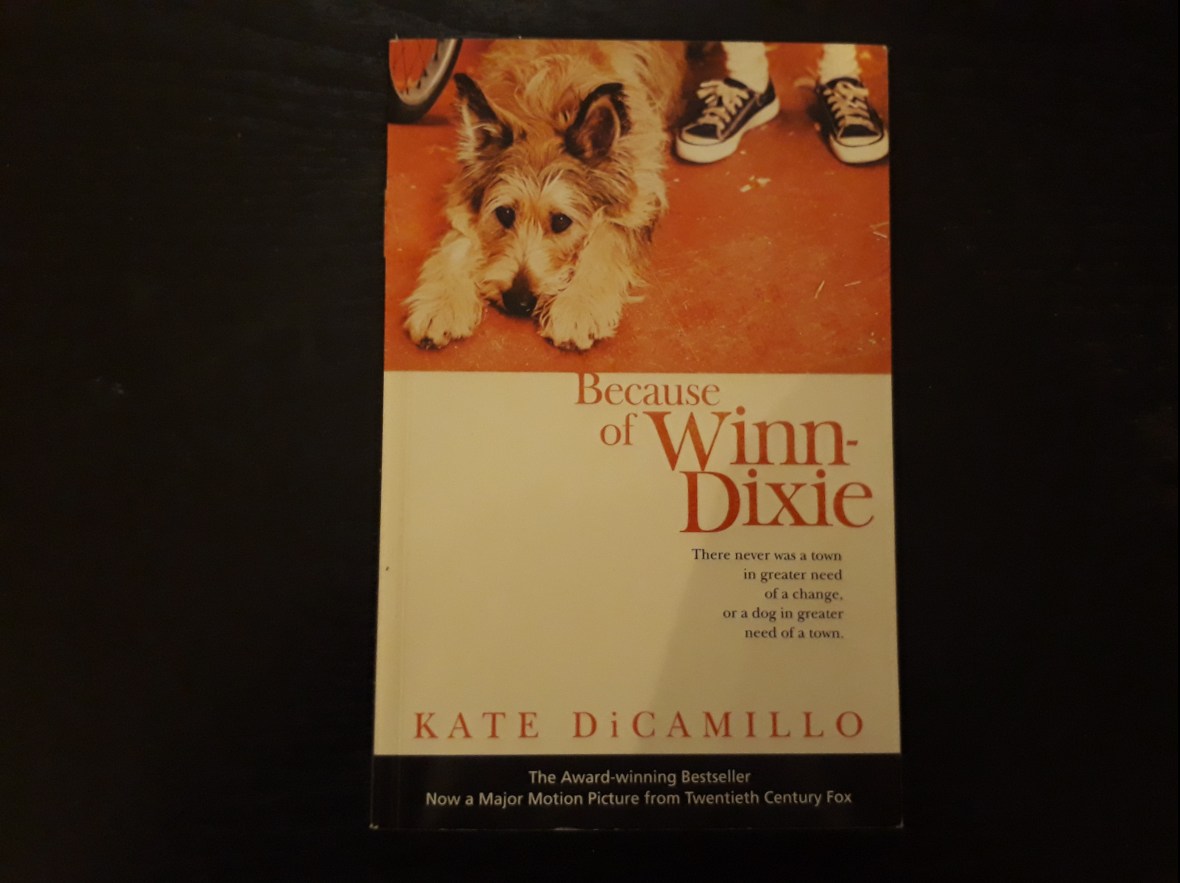
This is a perfectly charming and charmingly perfect book.

It tells the story of ten-year-old India Opal Buloni. She has recently moved to Florida with her father, who is a preacher, and she’s having trouble finding her place within the new community. However when she spontaneously adopts a stray dog named Winn-Dixie, it opens the door to new possibilities and new friendships.

Sometimes when I start reading a book, I know that I’m going to enjoy it almost straight away. That is what happened with Because of Winn-Dixie. In fact, it happened as soon as I read the following line:

He was a big dog. And ugly. And he looked like he was having a real good time. His tongue was hanging out and he was wagging his tail. He skidded to a stop and smiled right at me. I had never before in my life seen a dog smile, but that is what he did.

In a strange way, this book reminded me of Harper Lee’s To Kill a Mockingbird. Whilst Because of Winn-Dixie doesn’t focus on particularly harsh themes such as racial injustice, it does touch upon the way society views and treats its ‘outcasts.’ The character of Otis, who works in a pet shop, was briefly incarcerated for trivial reasons but since his release from prison he has found it difficult to reintegrate into the community. Even Opal feels unease when she learns of his past, despite the fact that Otis has only ever been kind to her. Similarly, the character of Gloria Dump likes to keep herself to herself and for this reason the local children call her a witch.

I think if you have a young child and you want them to read To Kill a Mockingbird when they’re older, Because of Winn-Dixie could be a good book to start them off with. When they get a little bit older, maybe introduce them to Lauren Wolk’s Wolf Hollow and then, finally, To Kill a Mockingbird.

Because of Winn-Dixie is adorable and funny and easy to read. I think it will hit especially close to home for readers who have ever owned a dog.

I’ve already recommended this book to a few different people and I’m sure I’ll read it again myself in the near future.

My First Bookish Post

Well, here it is. My very first post.

The idea for starting a reading blog came to me after I returned from holiday a few days ago. The town where I had been staying was in close proximity to a number of excellent second-hand bookshops, so I was able to buy lots of new (so to speak) books for a bargain price.

I don’t know why, but as I was packing my bag to go home, I felt a weird urge to make a note of the books I’d bought and to give some context as to why I’d decided to buy them. This post probably won’t be of interest to anyone apart from me, but I decided that it was as good a place to start as any.

So, without further ado, here is an arbitrarily-ranked list of my recent book purchases and my reasons for buying them:

Meridian by Alice Walker

20181106_201206

I read Alice Walker’s The Color Purple earlier this year and I really loved it. I was not immediately aware of any other books which Walker had written, so it was a pleasant surprise to find Meridian whilst I was browsing the bookshop shelves. I had a read of the first few pages whilst still in the shop and I was intrigued to note that Meridian seems to be written in a much more conventional format than The Color Purple.  Whilst The Color Purple was written in the character Celie’s unique vernacular, Meridian does not adopt a similar style, from what I can tell. Either way, Meridian sounds like a really inspiring story and I’m looking forward to reading it.

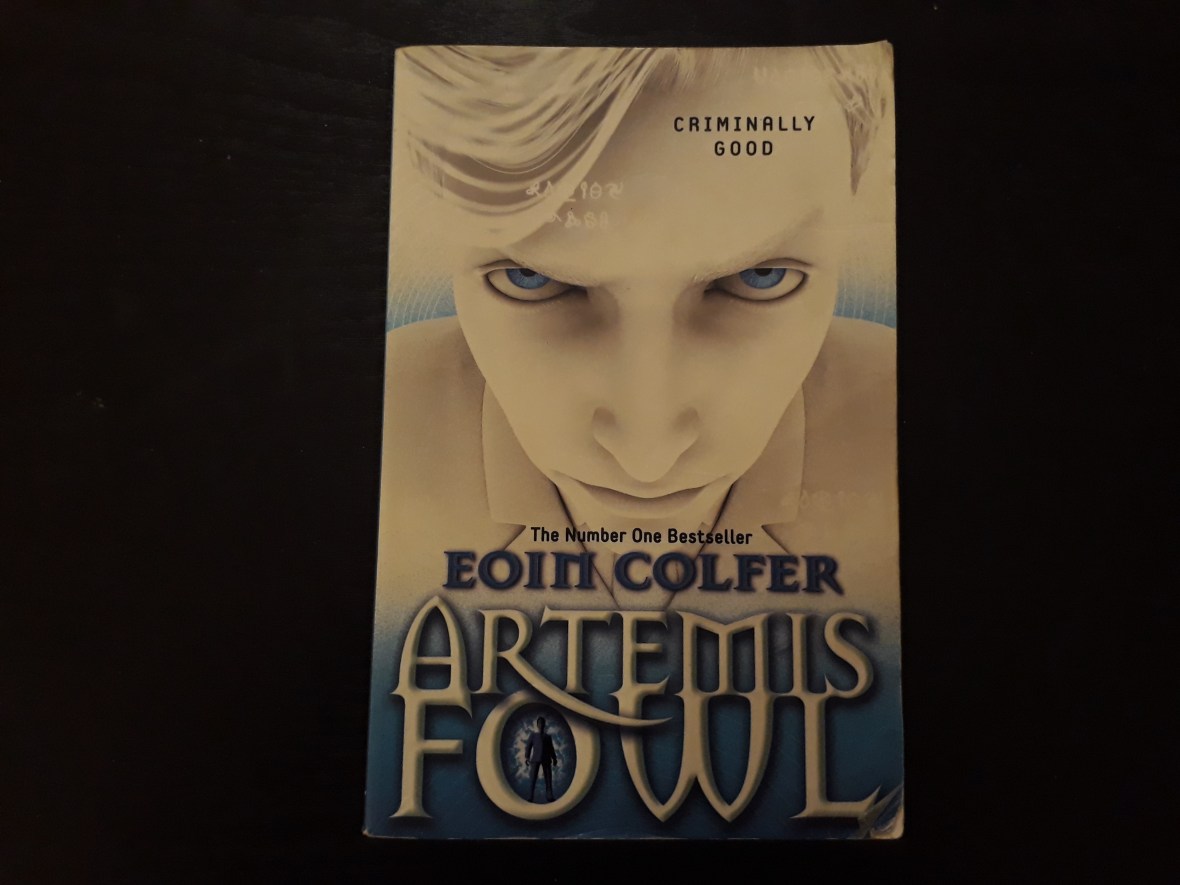
Artemis Fowl by Eoin Colfer

20181106_201152

This book seemed to be everywhere for a while in the early 2000s and yet I never got round to reading it. To this day, I continue to see Artemis Fowl cropping up on lists of best books for young adults, so I’ve decided that I’m finally going to give it a go. That cover kind of creeps me out though!

Because of Winn-Dixie by Kate DiCamillo

20181106_201134.jpg

I actually only heard about this book for the first time earlier this year. As of writing it’s been less than 20 years since the book’s publication, but it already seems to be something of a modern children’s classic. A member of my family works in a high school library and she approached me to ask for book recommendations for one of her students who loves animals. Whilst I was able to offer a number of suggestions off the top of my head, I thought I should do some wider research to assist her. I came across this title and sort of stored the book away at the back of my mind for future reference. I then happened across Because of Winn-Dixie whilst browsing in a charity shop (I’ve since finished reading this book and will upload a review in due course).

Stuart Little by E.B. White

20181106_201115.jpg

I got this book from the same charity shop as Because of Winn-Dixie. I’ve wanted to read Stuart Little for years and years but, much like Artemis Fowl, I just never seemed to get round to it. I used to watch the first Stuart Little movie a lot as a child and I remember enjoying it, so I’m interested to see how the book differs.

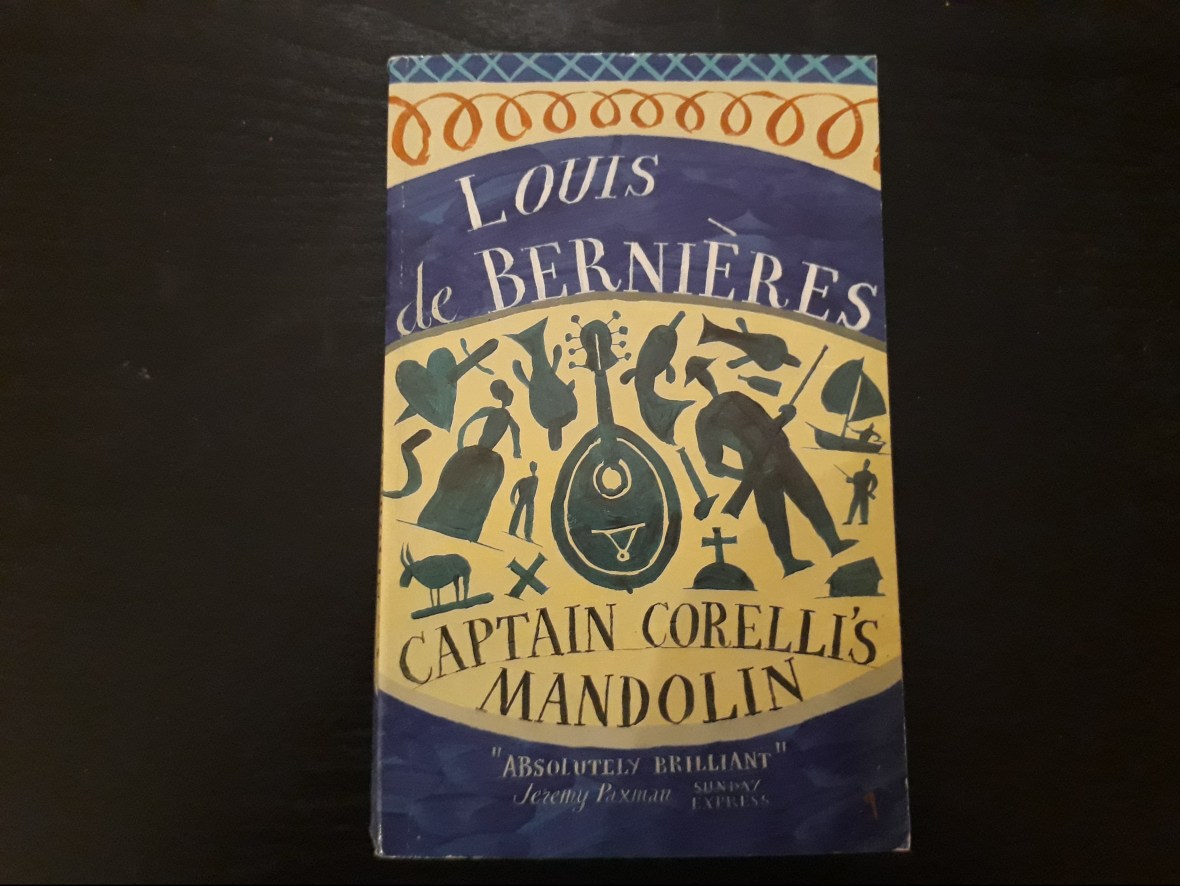
Captain Corelli’s Mandolin by Louis de Bernières

20181106_201004.jpg

Technically, I shouldn’t have bought this book, as my parents have said previously that I can borrow their copy. However, despite my love of books, I’m notorious for judging them by their covers. My parents’ copy of Captain Corelli’s Mandolin has the poster for the 2001 movie adaptation as the front cover. Every time I tried to read it in the past, the mere sight of Nicolas Cage’s face was enough to make me smirk. I love Nicolas Cage, but not in Captain Corelli’s Mandolin. If I’m going to read this book, I need a copy which doesn’t remind me of the movie.

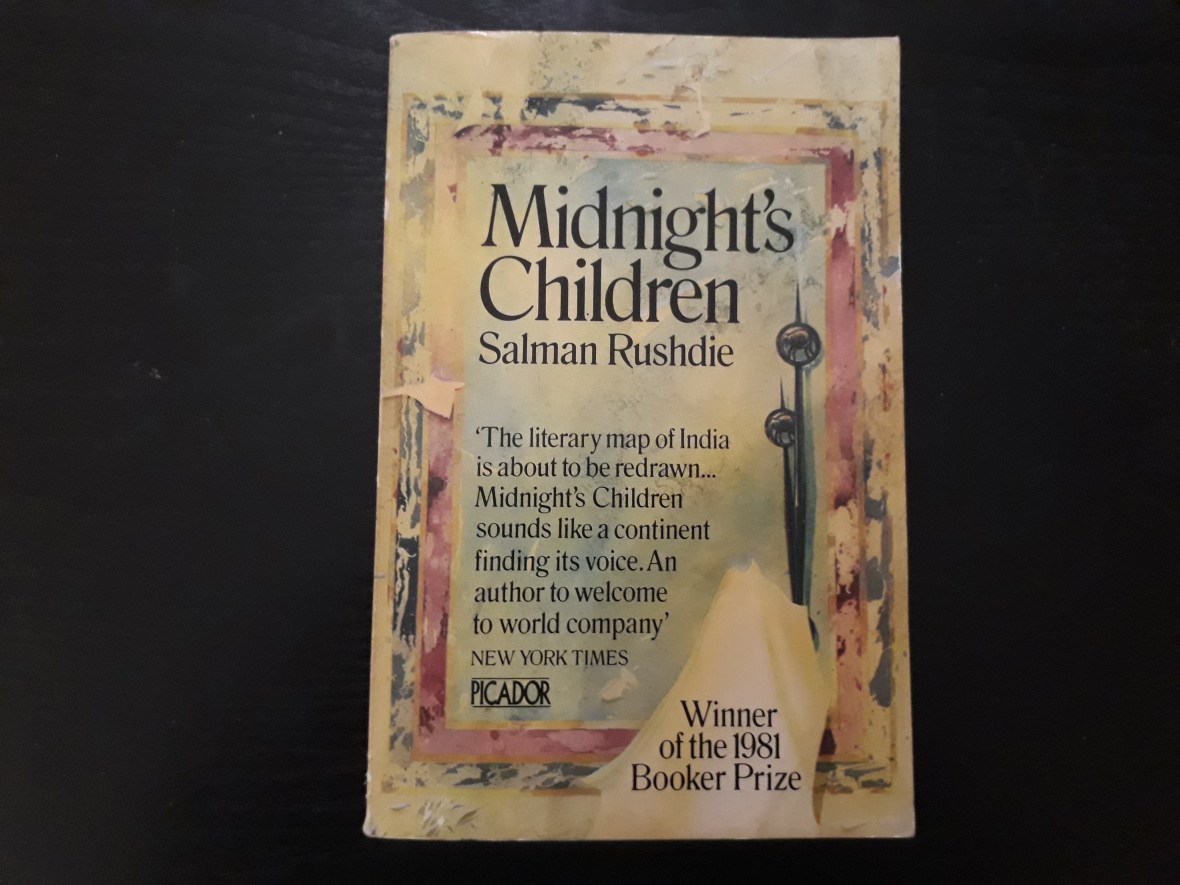
Midnight’s Children by Salman Rushdie

20181106_200948

Full disclosure: I have no idea what Midnight’s Children is about and the only thing that I really know about Salman Rushdie is that he had a cameo appearance in the first Bridget Jones movie. Still, there’s something enormously exciting about starting to read a book which you’ve only heard of in passing.

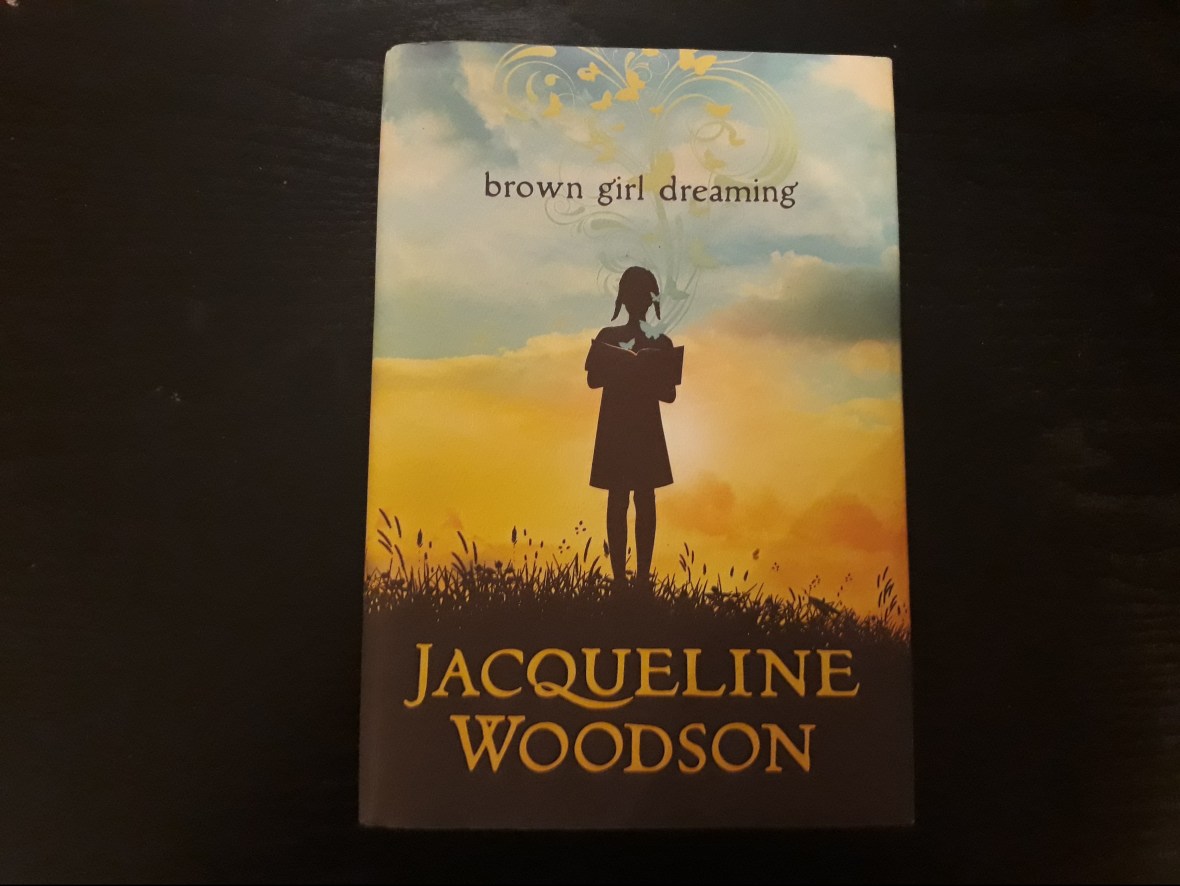
Brown Girl Dreaming by Jacqueline Woodson

20181106_200929.jpg

I first heard of Jacqueline Woodson earlier this year. I was reading about the author Daniel Handler (a.k.a. Lemony Snicket) and how he appears to have frequently belittled his female literary peers, including Jacqueline Woodson. In 2014, Woodson won the prestigious National Book Award for Young People’s Literature for her novel Brown Girl Dreaming. Woodson was the first black woman to ever win this award. During the ceremony, Daniel Handler made a racially insensitive joke about Woodson, which caused quite a bit of controversy. It frustrates me that I discovered Woodson as a result of Handler’s casual racism, rather than via a more positive route. However, hopefully I’ll really enjoy this book and the whole Handler situation will be pushed to the side as a result.

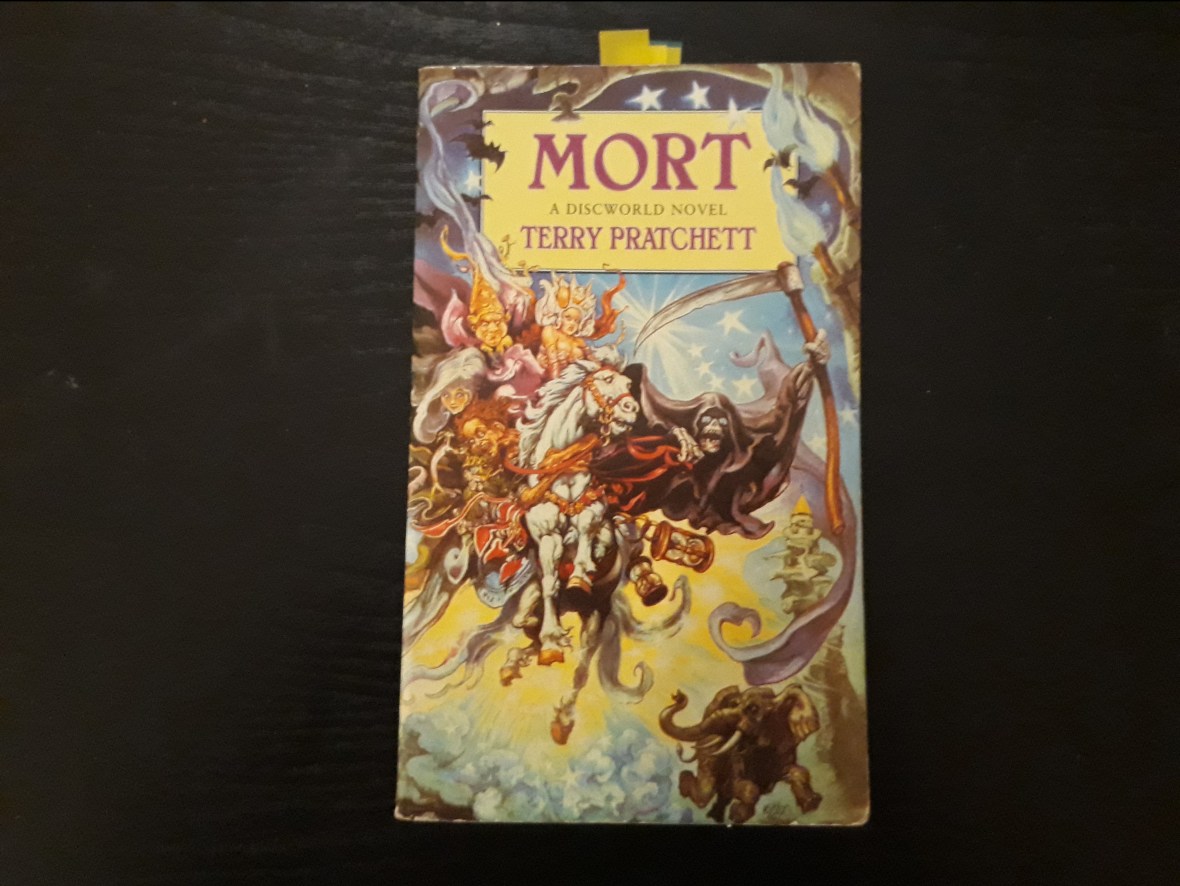
Mort by Terry Pratchett

20181106_201222.jpg

As a self-confessed bookworm, it pains me to say that I’ve never read a Terry Pratchett book in my life. I started trying to read The Colour of Magic several years ago and it didn’t really do anything for me. I’ve been told by a couple of fans of Pratchett’s work that The Colour of Magic isn’t one of the stronger books in the Discworld series, so hopefully I’ll like the others better. I absolutely adore the concept for Mort – that of a young man who becomes Death’s apprentice – so I’m going in to this book with a healthy dose of cautious optimism.

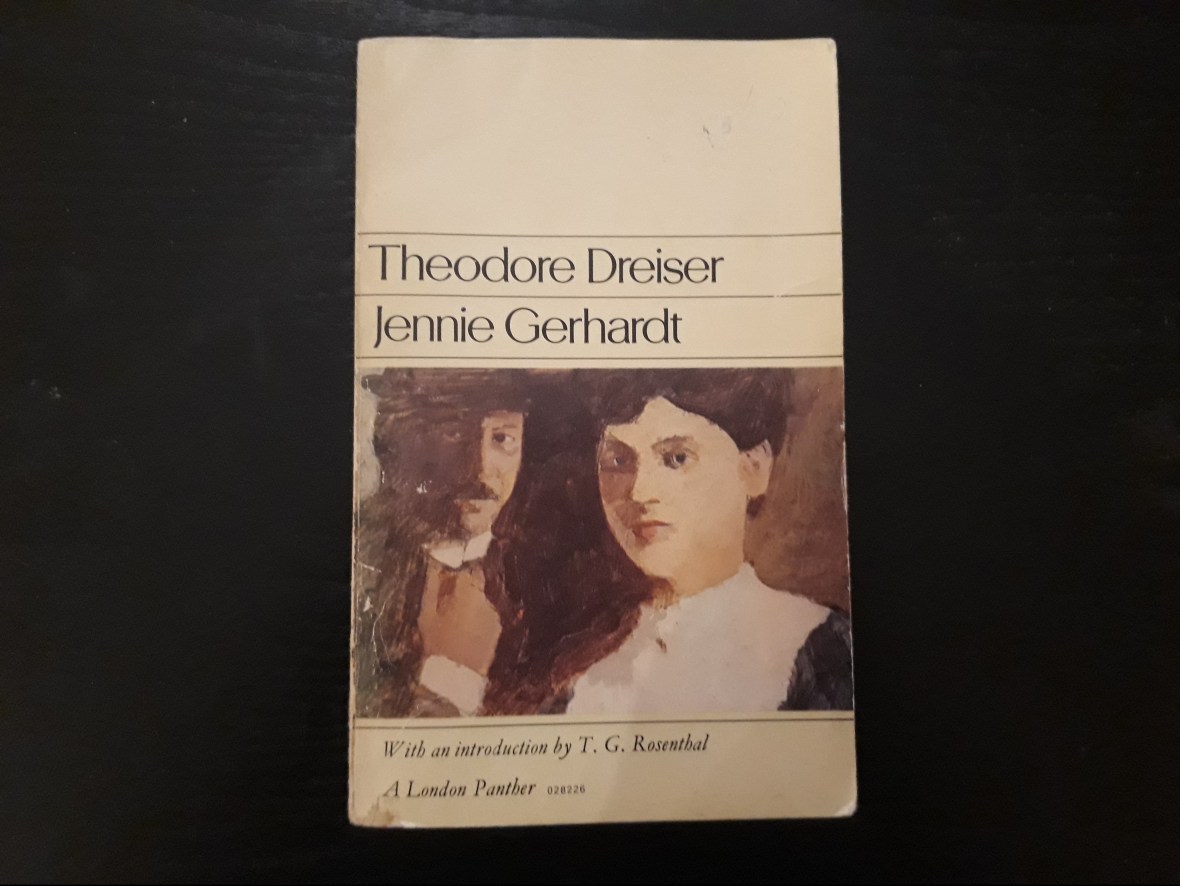
Jennie Gerhardt by Theodore Dreiser

20181106_200911.jpg

Full disclosure once again: I’ve never heard of this book or its author. I just kind of plucked it from a bookshelf and thought it sounded interesting. It’s about a pregnant woman at the end of the 19th century who’s cast out by both her family and her baby’s father. Although she is a member of an economically oppressed underclass, she resolves to fight to make a decent life for herself. I usually love stories of this sort, so fingers crossed it will be good!

Cross Stitch (a.k.a. Outlander #1) by Diana Gabaldon

20181106_202146.jpg

Whilst I’d previously had a vague awareness of the book and TV adaptation, I didn’t really have much interest in reading Cross Stitch until a few weeks ago. PBS recently concluded its TV series entitled The Great American Read, which sought to find America’s favourite book. Americans voted in droves for their favourite works of literature and Cross Stitch finished an astonishing second, beaten only by Harper Lee’s To Kill a Mockingbird. This was incredible to me and it really piqued my curiosity. As you can probably tell by the over-sized bookmark in the photo, I’ve already started reading it!

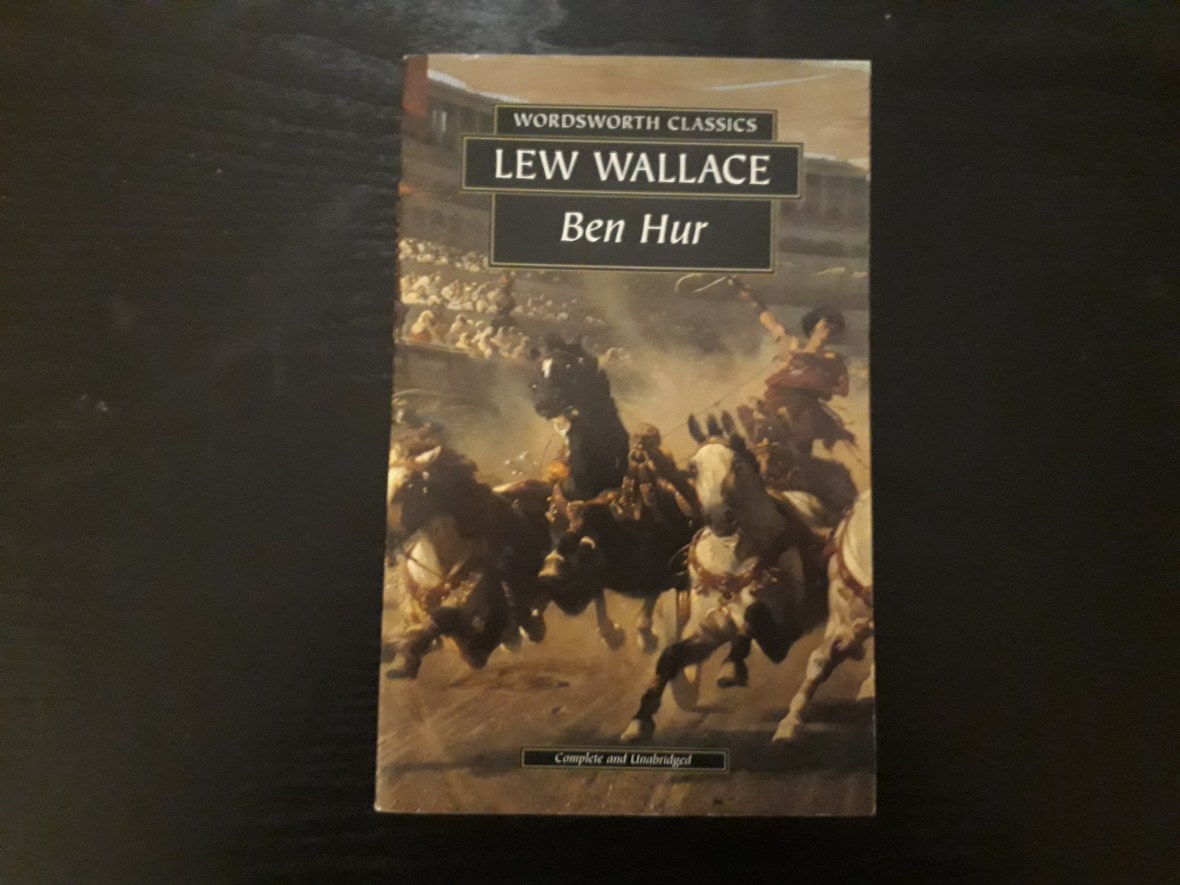
Ben Hur by Lew Wallace

20181106_201022

Even though elements of it are very dated, I adore the 1959 movie Ben Hur. I actually already own a different copy of this book (which I had also purchased second-hand) and started reading it earlier this year. I had just reached the part where Judah is falsely imprisoned and I started to reflect on how quickly the narrative seemed to be rushing along. Only then did I think to check the copyright page and I saw that my version of the story was heavily abridged. To me, it always feels a little bit like cheating when I read an abridged novel, so I stopped reading it there and then. Needless to say, when I came across my new copy and saw the words ‘Complete and Unabridged’ proudly displayed on the cover, I decided to invest.

So there you have it. My first post done and dusted.

Thank you if you’ve stuck with me to the end of this post. More than anything, it was just something to get me started. I have lots of ideas for further posts which will hopefully have a wider appeal than this one, but thank you again in the meantime.